
PGT Services

Embryo genetic testing, also called Preimplantation Genetic Testing or PGT, is a complicated genetic test offered as part of the IVF process. There are different types of PGT that can be done on your embryos, depending on why you need it.
Learn more about how we can help you decide if you want PGT, or understand your results once testing has been done.

PGT Consultation Service
Your consultation will always be tailored to your needs. Here are some things that are often discussed as part of these appointments:
How PGT is performed?
Is PGT right for you?
What steps are involved in PGT?
What do your PGT results mean?
Could your results be inaccurate?
What is the chance of a baby having a disability if this embryo leads to a pregnancy?
Are you comfortable using your embryos based on the results?
Are you comfortable discarding your embryos based on the results?
What genetic tests can you do if you get pregnant after using this embryo?
Do you want to transfer your embryo right away, or do another egg retrieval first?
Your consultation includes:
A meeting with a DNAide Genetic Counsellor by phone or video that lasts up to 60 minutes
A detailed consultation note summarizing everything discussed at your appointment. We can share this with your doctor if requested. This is customized to your needs, contains scientific references, and can be used to advocate for the transfer of your embryos
Continued communication with your genetic counselor for up to 2 weeks after your appointment by email or secure portal message if you have more questions
Support from your genetic counsellor after your appointment in obtaining more information about your embryos from your IVF clinic or the testing laboratory
Types of PGT we can help with
PGT-A
Preimplantation Genetic Testing for Aneuploidy. The most common type of PGT that can be done for anyone doing IVF. PGT-A tests for chromosome differences that most often prevent a pregnancy or lead to early pregnancy loss.
But PGT-A results aren’t black and white. Some embryos with results that don’t look totally normal can actually lead to completely healthy babies. At DNAide, we think that you deserve to have a complete understanding of your PGT-A results so you can make an informed decision about what to do with your embryos.
Learn more about PGT-A!
PGT-SR
Preimplantation Genetic Testing for Structural Rearrangements. PGT-SR is used when someone has a chromosome difference themselves. Even though this probably doesn’t impact your health, it can predispose you to creating embryos with chromosome differences that result in infertility, pregnancy loss, or babies with health concerns. PGT-SR helps identify the embryos with normal chromosomes and the best chance at leading to a healthy live birth.
If you have a chromosome difference, your doctor might have talked to you about IVF and PGT-SR. But this is a big decision! We’ll walk through your result, provide statistics about different outcomes (if available) and answer all your questions so you can decide if PGT-SR makes sense for you.
If you’ve already done PGT-SR and have questions about your results we can help with that too. Testing is similar to PGT-A, but since you have a chromosome difference it is very important that your results are interpreted correctly. We can help.
PGT-M
Preimplantation Genetic Testing for Monogenic Conditions. PGT-M is offered if you or your partner have a genetic condition or are carriers for a genetic condition that could get passed on to your future children. It is a big decision whether or not to do IVF with PGT-M, and there are a lot of steps involved in getting ready for the process. Your PGT laboratory will likely need your test results, and may need your relatives to get testing done or submit DNA samples.
Ways we can help with PGT-M:
Help you decide if it is right for you
Review the steps involved so you feel more prepared
Facilitate testing for your relatives/parents if they are in Canada. Learn more here
Help you understand your PGT-M results
PGT-P
Preimplantation Genetic Testing for Polygenic Disorders. Polygenic conditions are health conditions that are caused by more than one gene. Examples include type 1 diabetes and schizophrenia. This new type of PGT is offered by some fertility clinics. Depending on the testing laboratory, there are different limitations. It might sound good to test your future children for a wide variety of conditions that could impact their health, but sometimes this testing is too good to be true. What if your embryo with the best chance of leading to a baby has the worst diabetes score? Will you feel pressured to do more rounds of IVF? Plus there are concerns about the science behind some types of PGT-P.
Whether you want to know if PGT-P is right for you, or get help deciding how to prioritize your embryos for transfer, we can help.
PGT-WGS
Preimplantation Genetic Testing - Whole Genome Sequencing. PGT-WGS is the newest type of PGT on the market. Depending on the laboratory, it can do different things. Some PGT-WGS labs screen for genetic conditions that may happen brand new in an embryo, or that are passed down from the egg and sperm provider. These conditions could cause a health condition or disability. Other PGT-WGS labs are looking for complex genetic changes that impact the ability of the embryo to lead to a pregnancy.
These tests are often new, and the research is sparse. If you want to know if PGT-WGS is worth your money, or understand your results, DNAide can help.
Any of these types of PGT can be addressed as part of our PGT Consultation Service. Find a time on our calendar now.
Frequently Asked Questions
-
DNAide Genetic Counsellors cannot review raw data as part of a PGT consultation. We can often meet your goals without using raw data including prioritizing “abnormal” embryos for transfer, determining if certain embryos have a higher chance than others to be mosaic, etc. If you aren’t sure if working with us is right for you, contact us to request a free 15 minute discovery call.
-
We hear this a lot. Check out our blog post here for more details.
-
Usually we have appointments available with less than one week’s notice. If you need to see us more quickly, we offer urgent appointments for an additional fee. Request one here. If you don’t see a time that works, contact us.
-
We do need a copy of your PGT report, however, if you don’t have a copy we can help you get it. Request an appointment with at least 1 week’s notice. We’ll send you a form to complete so we can help you get a copy of the report from your clinic or PGT lab. If we don’t get a copy in time before your appointment we’ll make sure to reschedule in time without charging you any late cancellation fees.
Free Guide
Free Guide
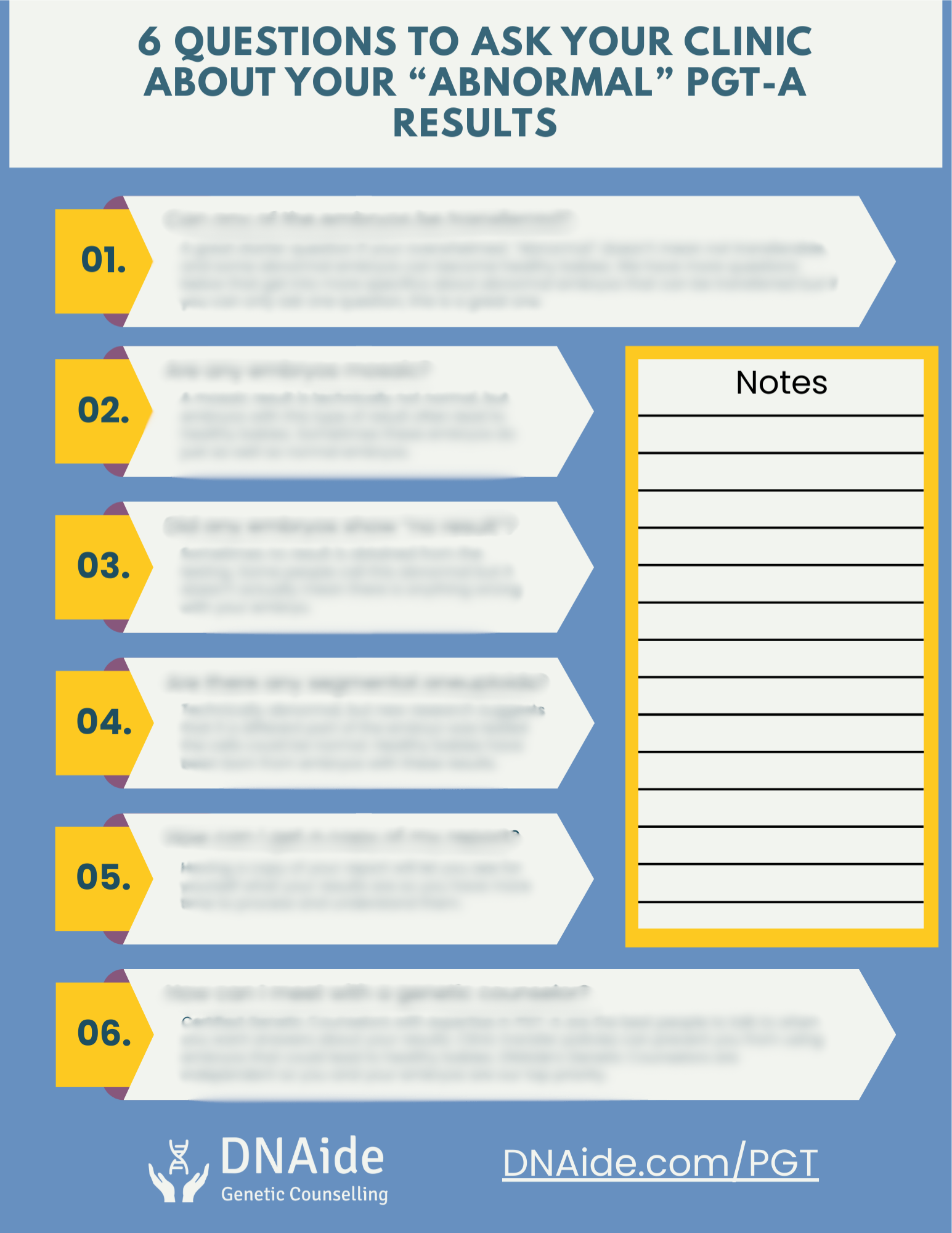
Learn how to advocate for yourself and avoid discarding usable embryos
PGT-A results calls are short and overwhelming, especially when you learn your embryos are “abnormal”. But what your clinic may not tell you is that not all “abnormal” embryos are the same, and some can lead to healthy babies!
DNAide's free guide gives you 6 questions to ask your clinic when you have “abnormal” results. So if your brain shuts down in that difficult moment, you'll have something ready to help you get the answers you need.